
Packaging Built Around What Buyers Need to See
We design product packaging around hierarchy, claims, variants, and real buying decisions, so customers understand the product quickly and know why it is worth choosing.
Built for Clarity, Recognition, and Scale
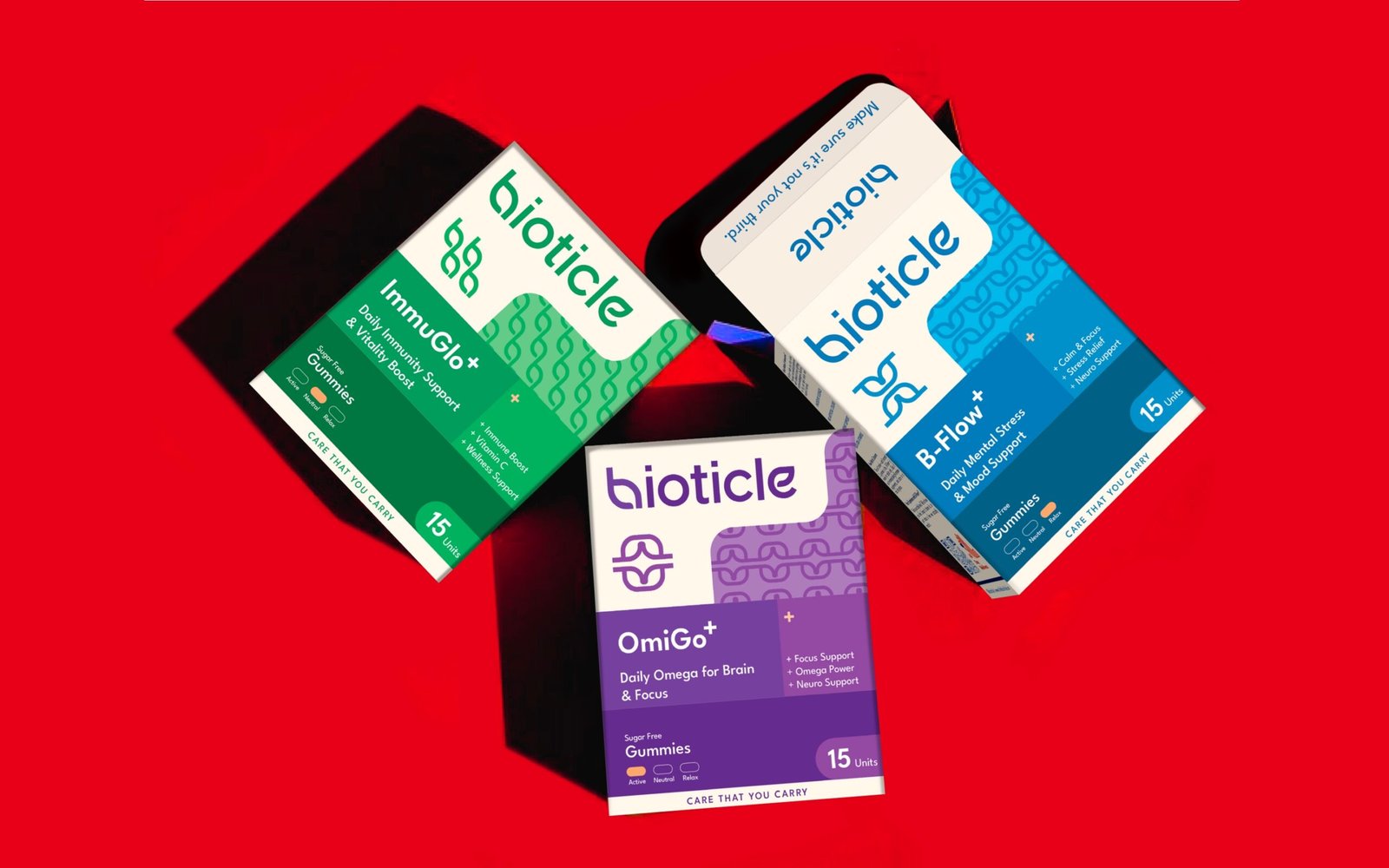
01. Front-of-Pack Hierarchy
The front of the pack has only a few seconds to answer the important questions: what is it, who is it for, what makes it relevant, and which information deserves attention first.
We build the hierarchy so the product can be understood quickly without turning the front panel into a wall of claims.
What we work on:
- Brand and product visibility
- Product / category naming
- Primary benefit or claim
- Information priority
- Visual hierarchy
- Pack recognition
02. Claims & Information Architecture
Good packaging is not only about the front panel.
Ingredients, benefits, usage, proof, mandatory information, product details, and supporting communication all need a clear place without making the pack feel complicated. We organise the information so customers can scan it naturally while the brand still feels designed.
What we organise:
- Product benefits
- Supporting claims
- Usage information
- Ingredients / product details
- Side and back panels
- Information hierarchy
03. SKU & Variant System
04. Production-Ready Artwork
Featured Projects
Transformations Exposed
Packaging design at TFX usually takes 4 to 6 weeks, depending on the number of SKUs, formats, information complexity, and how quickly final inputs are available.
We move from understanding the product and category to creating the main pack, building the SKU system, and preparing the final approved design files.
How the Work Moves
Week 01
Product, Category & Pack Understanding
Week 01 - 02
Hierarchy, Claims & Information Architecture
Week 02 - 04
Master Pack Design & Creative Development
Week 04 - 05
SKU, Variant & Size Extensions
Week 05–06
Artwork Finalisation & Production Handover
What Leaves Our Studio
Pack Architecture
Clear hierarchy for front, side, and back-of-pack information.
Master Pack Design
Complete design direction for the primary SKU or product.
SKU System
A scalable visual system for variants, flavours, sizes, and extensions.
Production Artwork
Final artwork prepared on the approved dieline and specifications.
What We Need Before Production
Before final artwork can be prepared, we need the approved inputs that belong on the pack.
- Final dieline from the printer/vendor
- Final product name and variant names
- Approved claims and benefit copy
- Ingredients / nutritional information
- Mandatory declarations supplied by the client
- Barcode / QR codes where required
- Printer specifications, if applicable
- Final stakeholder approvals
TFX handles the design, hierarchy, and artwork placement. Regulatory, and product-information accuracy remains subject to client and relevant specialist approval.
Questions Founders Usually Ask
What do you need from us before packaging design starts?
We usually need a clear understanding of the product, target customer, category, pack format, SKU structure, and the information that needs to appear on the packaging.
Depending on the product, this can include:
- Product and variant names
- Pack dimensions or dieline
- Claims and key benefits
- Ingredients or nutritional information
- Mandatory declarations
- Barcode or QR code
- Competitor references
- Printer or vendor specifications
The cleaner these inputs are at the beginning, the faster we can focus on hierarchy, design, and making the pack easier to understand and choose.
What is the difference between a master pack and an SKU extension?
The master pack is where the main packaging system is created.
This is where we establish the hierarchy, typography, colour behaviour, claims, imagery, graphic language, and overall pack architecture.
Once that system is approved, we extend it across flavours, variants, sizes, or related products.
The goal is not to redesign every SKU independently. It is to create one strong system that keeps the range consistent while making each product easy to distinguish.
Do you create the packaging dieline too?
For most packaging projects, the final technical dieline should come from the printer, manufacturer, or packaging vendor producing the pack.
We then design the approved packaging system onto that dieline and prepare the artwork accordingly.
If structural packaging development is required, that should be discussed separately because structural engineering, material testing, and manufacturing specifications are different from graphic packaging design.
This distinction prevents design decisions from being made on dimensions that may later change during production.
Do you handle packaging compliance and mandatory information?
We design the hierarchy and placement of the information supplied for the pack, including claims, ingredients, nutritional information, warnings, declarations, barcodes, and other required content.
However, the final accuracy and legal or regulatory approval of that information should come from the client and the relevant regulatory or product specialist.
Our job is to make required information clear and well integrated into the packaging without allowing it to overwhelm the design.
Brand Building Services Only
Not a 360° agency. A focused studio for serious brand foundations.
01
02
03
Packaging Design
Packaging designed to sell on shelves, ecommerce, and quick commerce.
04
Luxury Packaging Design
Premium packaging for brands where perception, detail, and unboxing matter.